Academic Freedom-- According to Alumna Lynne Cheney


Under the New Badger Partnership, Governor Walker will appoint at least 7 UW-Madison alumni to the Board of Trustees. Who might these fine folks be? What might they believe about academic freedom? We might as well get educated. Here's the first in a series.

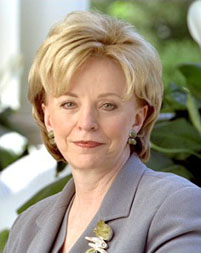
"Academic Freedom" by Lynne Cheney

"In the last few years, people intent on using the curriculum and the classroom to advance a political agenda have become very frank about their purpose. In an article in Harvard Educational Review, a professor at the University of Wisconsin insists that professors like herself should be very open about their intention "to appropriate public resources (classrooms, school supplies, teacher/professor salaries, academic requirements and degrees) to further various 'progressive' political agendas." This professor describes a class she teaches at the University of Wisconsin called innocuously enough "Curriculum and Instruction 607," but it has an anything but innocuous purpose. Students are taught to demonstrate in Curriculum and Instruction 607—and then they actually demonstrate, as the professor describes it, "by interrupting business as usual (that is social relations of racism, sexism, classism, Eurocentrism, as usual) in the public spaces of the library mall and administrative offices." All this, and students get three hours credit, too. Which is certainly a marked change from when I was at the University of Wisconsin in the 1960s. Students demonstrated then, but nobody ever thought of giving them credit for it."

She's talking about Elizabeth Ellsworth, a professor in the School of Education from 1984 to 2002, and now an Associate Dean at the New School in New York City.

"Ideas are powerful, and those that emanate from our colleges and universities carry a special authority. That is why it seems to me particularly important that we have a free and open discussion of the relationship between knowledge and politics. There are good people on our campuses trying to initiate these discussions, but they often find themselves marginalized, and they need support."

"Those of us off-campus need to make our concerns known as well. When it is time for us to help our children choose a college, we should ask hard questions about which campuses not only allow but encourage a diversity of opinion. When it comes time for us to make contributions as alumni, we should ask how well the college attended is doing at making sure all sides of controversial issues are heard. Those who serve on boards of trustees should encourage discussions of academic freedom of both faculty and students."

Agree with her, disagree with her -- do what you will. But ponder this: Lynne Cheney is an alumna who clearly feels she has a right--and indeed an obligation-- to tell faculty how and what to teach. Under the NBP Scott Walker can simply appoint her to govern this institution.

Speak now, or meet Mrs Cheney.

Someone's Not Listening...


I have a four-year-old and a one-year-old so I'm used to people who don't listen. I repeat myself, say it more firmly, and find new ways to express the same message.

So let's try this one more time--

Governor Walker and the Legislature:
The State of Wisconsin is doing a very poor job of securing the future of its citizens by investing so little in public education at all levels, including higher education. However, if it has such poor judgment so as to slash education at this critical time, it is in the best interest of the state to give the institutions some additional flexibilities as outlined in the Wisconsin Idea Partnership (WIP). It is, however, not in the state's best interests to allow UW-Madison to be swept from the UW System and placed under the direction of its own Board of Trustees.

Chancellor Martin:
First, what you have proposed in your new "compromise plan" is a scary version of the WIP. Why scary? Because now it's just even more painfully clear: You seek to privatize UW-Madison, period. Why else would you seek to ensure it keeps all of its own revenue and is governed by a new board that is led by Scott Walker and his appointees as of July 1? Under the WIP you could get a nice set of flexibilities minus those that directly threaten Madison's future as an accessible public institution: tuition-setting authority, full financial management, and the Board of Regents. In order to control tuition, keep all the cash, and install people appointed by Scott Walker, you are willing to divorce System. That's it, I'm done wondering whether this could be about money. This isn't about money nearly as much as it's about power.

Second, your campus community has made it abundantly clear that we want to know what's going on. Sending a letter proposing a compromise to other chancellors and the Legislature without bringing it to us first is not ok. Finding out in the newspaper--only after a reporter has to do some sleuthing --- NOT OK.

**********

Compromise is a good thing. The Board of Regents has shown a remarkable ability to compromise by proffering the Wisconsin Idea Partnership to everyone, including Madison, while not simultaneously demanding Biddy Martin's resignation. Can such a partnership be implemented with her present? I guess that depends on whether she starts following her own request for input and starts listening.


UPDATE: Biddy Martin tweeted this at me: "Not meant to be a compromise; a third option that adds, not subtracts."

Does anyone see any value-added in this? I sure don't.

Tell Her About It

After more than two hours of sitting in small hard wooden chairs on this blustery Monday afternoon, Faculty Senate at UW-Madison finally got interesting. In the midst of a discussion led by (I kid you not) "Committee of the Whole Discussion of Fiscal Models for the Proposed Public Authority, and Institutional Governance and the Proposed Board of Trustees," Chancellor Biddy Martin appeared to have had enough.

She'd taken numerous questions from faculty who seemed uncertain about the implications of her proposed New Badger Partnership (including a series of questions proferred by yours truly), and seemed to have reached the end of her rope. Red-faced, she looked at the crowd of 100 or so, and said:

"I'm out there on my own on this one...Regents and chancellors are against it...If the faculty, staff, and students of UW-Madison aren't supportive [of the NBP] then it makes no sense for me to continue. I'm tired. I don't need to be out there on my own. You need to let me know if you aren't behind it."

I almost--almost--felt bad for the lady. After all, she's just trying to do what she was hired to do. It's not her fault that she's been setup to dismantle a wonderful, public institution and to make it appear the dismantling is due to financial constraints rather than a power grab by conservatives.

But I didn't feel bad, and here's why. Her seemingly honest desire for the airing of objections is offset by her actions. This is a chancellor who excludes, at least as often as she includes. She convenes small groups of powerful folks, and keeps the vast majority on the outside. She has hired and promoted people who pledge allegiance to her for fear of doing otherwise. She has managed to make people support her agendas even when they feel incredibly uncomfortable doing so. We're in a financial crisis and they need their jobs-- and love this university.

My guess? People won't share their objections to NBP with Biddy Martin. Not because the campus agrees with this move, but because, quite frankly, people are scared of her.

I know this for a fact because over the last three months I have received several dozen emails, text messages, phone calls, and even drop-in office visits from university colleagues who have told me they feel as I do but are unable to attach their names to these sentiments. I notice the same at the public forums where the chancellor is present-- hands shake when questions are asked, no one pushes further when a question isn't directly addressed. This, more than anything else, is destroying our campus. Morale is low, and faculty and administrators are afraid to speak their minds and oppose a proposal to fundamentally alter how our state's flagship university does business.

In fact that says it all. Folks, the NBP isn't about money at all. It's about power.

The silence is deafening.

You Call Yourself a Cadillac


"Chancellor Martin asked Governor Walker for a Chevrolet, and he graciously offered her a Cadillac. We [the Badger Advocates] are here to make sure she gets that Cadillac."

This is the explanation offered by Pete Christianson (Badger Advocate chairman and immediate past-president of the Wisconsin Alumni Association) for the emergence of a private lobbying group devoted to advancing Chancellor Biddy Martin's New Badger Partnership. He made the statement at a Friday afternoon meeting of PROFS.

Listening to Pete go on about the virtues of the Martin-Walker partnership, Robert Nighthawk's old blues song immediately came to mind..."You call yourself a Cadillac but you act just like a T Model Ford...You call yourself my baby but you still don't treat me right..."

What we the people of Wisconsin deserve to know is what's under the hood of that Cadillac?

Seems like a reasonable question, but all we're told is that the NBP runs on flexibilities. It provides funding to UW-Madison as a block grant, allows the university to retain all of its revenues and set policies for use of that money, lets the Board of Trustees (rather than the Regents) establish tuition, eliminates oversight from OSER, and puts us into direct contact with DOA.

What does all of that accomplish? More specifically:

What exactly are the cost-savings? For whom?

What do we gain in terms of power and control over the protection of academic freedom? Shared governance?

Who in particular will have greater say-so over Madison? Who benefits from that change?

The answers to these questions are largely unclear. We have not been given hard data to prove that we will save a substantial amount of money. We have not been shown the savings relative to other cost-saving measures. Instead we're just told that the current system doesn't work and we need flexibilities to solve problems. We have not been shown where costs will increase--e.g. who will foot the bill. We are simply told that tuition will go up and this will--somehow--save students money.

The Badger Advocates told PROFS that the NBP brings no gains in terms of protections for academic freedom or shared governance. Faculty emails will not be more secure under the new plan. Here are Pete's own words (written in response to my initial recollection of his words, relayed on the first version of this posting):

"Whoever is Governor will control the Board of Regents and will also control the board created to govern the Madison campus. Since the merger occurred in the 1970's, no Governor has done anything to further [protect] academic freedom or shared governance or make faculty emails more secure. If you have a complaint in this area it is with every Governor who has served since merger."

Well there you have it-- no gains for any of these important public university protections will come with the NBP. Next "advantage"?

In terms of who will gain more power with a public authority model, the answers are unspoken but not at all unclear. The Chancellor will have more power. So will the alumni and students and faculty named to the Board. Unsurprisingly, those are the folks lobbying for the change. I remain struck by the insistence of both Biddy Martin and Pete Christianson that we have nothing to fear from the Board of Trustees since it will be dominated by alumni. Our alumni are a vast, heterogeneous group of individuals. They include Lynne Cheney, J.B. Van Hollen, and David Keene, incoming president of the NRA and founder of CPAC. What reason do we have to believe that a few years attending Madison convinced these folks of the merits of public higher education and committed them to preserving all of its missions? If anything, it may have convinced them it needed to be radically changed. During Keene's days at Madison, he was “practically as right-wing as the Students for a Democratic Society are left-wing.” Walker could fulfill his commitments and increase his chances for conservative, political success by placing Keene on the Board of Trustees.

What's especially amazing is that the alumni who oppose the NBP are being silenced. Take a look at the array of negative comments made by alumni from all over. That page of comments has been deleted from the WAA website and whitewashed with a "thanks for your good dialogue and we support the NBP" positive statement.

The closer one looks at the NBP, the more questions arise. The most common argument made by its defenders are "If not NBP, then what?" That's the wrong question. Choosing the NBP in its Cadillac form -- the Cadillac created by Governor Scott Walker--means upending a System that has been in place for 40 years. Smart policymakers do not dismantle public policies or social programs without proof that (a) a new system has demonstrable benefits and (b) those benefits outweigh the costs of a radical change. The only substantial benefits to the NBP accrue to those who wish to see education privatized, and liberal education demolished. There are numerous such individuals throughout the United States and indeed the world, and they laid out specific plans for ending tenure and academic freedom decades ago. Those plans closely resemble the elements of this Cadillac. Why else is Walker expending his limited political capital on op-eds supporting the end of UW System and a major change in governance of UW-Madison? What we are seeing now is their manipulation of our chancellor and other leaders of public higher education, forcing them to deal with drastically unfair financial constraints and backing them into an untenable corner. It is from that highly compromised position that they are advancing a proposal that makes them feel like they are accomplishing something and protecting Madison from an untimely demise. If we do not look under the hood of this Cadillac, we are doomed.

Maybe that's a bit too dramatic. So let me end on with the words of a slightly older, much wiser colleague. "Once upon a time, the dream was to have a Chevy with a Caddy motor in it -- looks like nothing but flies like a bat out of hell. After not too long, people were dropping V8s into Vegas and things like that. That's what UW has traditionally been: Plain and modest-looking, but extremely powerful. Folks, what we've got here is a 1980s Coupe de Ville with a lawnmower engine."

Note: This post was updated at 750 pm on April 2 to reflect the input of Pete Christianson.
Governor Walker Hearts Public Higher Education

I'm so happy our Governor Scott Walker loves public colleges and universities. I'm now convinced he knows what's best for us. Full speed ahead.

After all...

‎"Until and unless you discover that money is the root of all good, you ask for your own destruction. When money ceases to become the means by which men deal with one another, then men become the tools of other men. Blood, whips and guns--or dollars. Take your choice--there is no other."

Ayn Rand (from "Atlas Shrugged")

Live By The Sword, Die By The Sword Redux


A USA Today investigation calls into question "dramatic" improvements in student test scores in select District of Columbia schools due to an "abnormal pattern" of erasures. This occurred during Michelle Rhee's tenure as DC schools chancellor.

Among the 96 DC schools that were flagged for wrong-to-right erasures by the city's testing contractor in 2008 "were eight of the 10 campuses where Rhee handed out so-called TEAM awards 'to recognize, reward and retain high-performing educators and support staff'.... Rhee bestowed more than $1.5 million in bonuses on principals, teachers and support staff on the basis of big jumps in 2007 and 2008 test scores.

In 2008, to her credit, then-DC state superintendent (now Rhode Island education commissioner) Deborah Gist recommended that large test score gains in certain schools be investigated, but as USA Today reported, "top D.C. public school officials balked and the recommendation was dropped."

Such allegations and instances of cheating are not unique to Washington DC of course. In 2010, a New York Times article chronicled erasures in Houston and noted investigations in Georgia (including a criminal probe in Atlanta), Indiana, Massachusetts, Nevada, and Virginia.

This latest development, however, adds a new wrinkle to my 2009 post, "Live By The Sword, Die By The Sword."
Michelle Rhee and other education reform advocates have publicly argued that student performance as measured by test scores is basically the be all and end all....

Student learning, school leadership and teaching cannot be measured and judged good or bad based on a single set of test scores. Test scores must be part of the consideration -- and supporting systems such as accountability, compensation and evaluation must be informed by such data -- but they should not single-handedly define success or failure.
When such huge stakes are placed on a single metric, it raises the likelihood of monkey business. Although it is highly likely this is what occurred in DC, a former employee of DC Public Schools (who tweets as @EduEscritora) makes several smart observations on her blog:
[T]he fact that the number of flagged schools decreased so precipitously from 2008 to 2009 is encouraging, even if we don’t know why that happened.

The decreasing number of schools also doesn’t support the claim that the pay-for-performance system now in place under IMPACT has resulted in cheating; 2010 was the first year that IMPACT existed, and that had the fewest number of flagged schools out of the three years in the study and the fewest number of schools with over 50% of the classrooms flagged – only two!
The problem for an advocate like Michelle Rhee is that she has chosen to largely define success based on a single metric: the test score. If many of these DC test-score gains turn out to be illusory and succumb to what some are calling the "Erase To The Top" scandal, it may spell further trouble for Rhee as a spokesperson for the school reform movement. (Rhee has claimed the largest NAEP score gains in the nation under her leadership, although other analyses have shown that increases began and were larger under Rhee's predecessors.) Her credibility already has been questioned by some as a result of alleged embellishments on her resume about her own teaching record. Without credibility, it is impossible to sell one's wares to anyone but true believers.

From a PR standpoint, this erasure story would seem to call for a measured response that carefully chronicles whatever steps, if any, were taken by DCPS at the time to address the unusual frequency of erasures. Instead, through a spokesperson, Michelle Rhee chose to 'shoot the messenger,' bombastically placing USA Today among the "enemies of school reform." [UPDATE: From the Washington Post's Jay Mathews: "Rhee calls her remarks on test erasures 'stupid'"]

Given Rhee's rhetoric, her policies in DC, and her current focus as head of StudentsFirst (which increasingly appears to be working solely with Republican governors and legislators at the state level), Michelle Rhee has largely pinned her credibility to the test score. If she had chosen to sit on a stool with more than a single leg, she might be sitting more comfortably right now and might not be engaged in a such a precarious and delicate balancing act. No doubt by taking on teacher tenure, she would have made enemies no matter what else she said or did. However, if she touted a more nuanced view of school improvement and student success and didn't poo-poo collaboration, she might not face a growing anti-Rhee cottage industry and her new organization might have had a chance to be a true non-partisan force in education reform.


Let's Develop Solutions

Tired of the rhetoric? Want to take a stab at cutting costs in Wisconsin public higher education yourself-- or even try increasing productivity?

The Lumina Foundation has supported the development of an amazing interactive tool that helps you do just that.

Here's one result I generated:

Let's say we need to close the 2025 budget gap for Wisconsin public research universities to maintain current spending per FTE student. We can do that by increasing student/faculty ratio from 13:1 to 17:1. Period. Gap closed. No increases in tuition or state & local revenues necessary. And research suggests that such an increase will come at no significant cost to degree completion rates. If you want to suggest it will hurt instructional quality, you'll need to provide hard causal evidence to support that case-- I'd love to see it--email it to me!

Better yet, let's first increase faculty salaries per FTE to the 75th percentile (which means an increase of about $1,000 from a starting point of about $6,300) and do the same for student support services too. Let's further commit to no tuition increases, and assume no increase in state or local revenues either. We can do ALL that and still have no budget gap if we increase student/faculty ratio from 13:1 to 19:1.

What is required to increase student/faculty ratio? Obviously we either enroll more students, retain more students, or reduce the size of the faculty. Here are the two main challenges:

(1) There is a widely held belief that student/faculty ratio is THE measure of quality in higher education, despite an overwhelming dearth of evidence to support that belief. It's no coincidence that rankings systems rely so heavily on that measure--and that all this talk of being competitive seems to set aside any possible changes to the student/faculty ratio. In fact, since the ratio is actually interpreted to mean "commitment to teaching" that effectively precludes any real re-consideration, lest we come across as not committed to education! But come on-- what evidence is there that the number of faculty allocated to students is the best indicator of commitment? How about the number of highly-trained faculty? The amount of professional development offered? The valuation of teaching in tenure decisions? This reeks of a system that responds to the needs of faculty more than students (for more, see my next point). There are alternative ways to measure quality.

(2) Faculty. Faculty at research universities tend to strive for as little student interaction as possible. Yep, I said it. There are some exceptions, but generally we spend our time vying for smaller classes and less advising. Could we learn to teach bigger classes and do it well? Could we be required to do so at least semi-regularly? Could the advising load for undergrads be spread across a wider range of faculty (including those in departments that don't teach undergrads)? Sure. But you'll face resistance.

So let's stop pretending that there's only one way to skin this cat. We don't have to break from UW System, hike tuition, and/or become semi-private in order to solve our fiscal crisis. We have to have tough conversations about the best ways to deliver higher education in the 21st Century. Sure, that's a tall order-- but it's one that the smart communities of Wisconsin's public universities can no doubt handle.